Adderall vs Vyvanse: Which ADHD Medication Lasts Longer?
A comprehensive evidence-based comparison of Adderall (Amphetamine Salts) and Vyvanse (Lisdexamfetamine) for U.S. patients seeking long-lasting ADHD symptom control.
Table of Contents
1. Introduction
Attention-Deficit/Hyperactivity Disorder (ADHD) affects approximately 6.1 million children and 8.7 million adults in the United States.[1] For many, stimulant medications are essential for managing symptoms of inattention, hyperactivity, and impulsivity. Two of the most popular long-acting options are Adderall and Vyvanse. But when it comes to Adderall vs Vyvanse for ADHD, which one lasts longer and which one is better for your specific needs?
The short answer: Vyvanse generally lasts longer (up to 14 hours) than Adderall XR (up to 12 hours).[2][3] Vyvanse is a prodrug designed for a smooth, sustained release, while Adderall XR provides a biphasic release that covers the school or work day. Both are FDA-approved and Schedule II controlled substances, available only by prescription.[4]
If you are exploring other ADHD medication options, you may also find our comparison of Adderall vs Ritalin helpful for a broader perspective on different types of stimulants.
🔗 External Authority Reference: According to the Mayo Clinic, the best ADHD treatment often involves a combination of medication and behavioral therapy.[5] The FDA classifies both as Schedule II due to their potential for abuse and dependence.[4]
2. What is Adderall?
Adderall is the brand name for a combination of amphetamine and dextroamphetamine.[2] It is a central nervous system stimulant that is FDA-approved for the treatment of ADHD (in both children and adults) and narcolepsy.
Adderall is available in immediate-release (IR) and extended-release (XR) formulations. The XR version provides a biphasic release – an initial dose is released immediately, followed by a second dose about 4-6 hours later. This design provides coverage for up to 12 hours, making it convenient for once-daily dosing.[2]
Adderall works by increasing the levels of dopamine and norepinephrine in the brain, which helps improve focus, attention, and impulse control.[6] It has a half-life of about 9 to 14 hours.
Common Dosage
Adderall XR is available in strengths of 5mg, 10mg, 15mg, 20mg, 25mg, and 30mg capsules. The typical starting dose for adults is 10mg once daily, with a maximum of 30mg per day.[2]
👉 Learn More: For detailed information on dosage, side effects, and safety, read our comprehensive Adderall 30mg Informative Guide.
3. What is Vyvanse?
Vyvanse is the brand name for Lisdexamfetamine, a central nervous system stimulant that is FDA-approved for the treatment of ADHD (in both children and adults) and Binge Eating Disorder (BED).[3]
Vyvanse is a prodrug – it is inactive until it is metabolized in the body, where it is converted to dextroamphetamine. This unique mechanism provides a much smoother onset and offset compared to immediate-release stimulants. It provides coverage for up to 14 hours with a single daily dose.[3]
Because of its prodrug design, Vyvanse has a lower potential for abuse compared to other amphetamines, as it cannot be crushed or snorted to achieve a rapid high.[4] Its half-life is about 12 hours.
Common Dosage
Vyvanse is available in strengths of 10mg, 20mg, 30mg, 40mg, 50mg, 60mg, and 70mg capsules. The typical starting dose for adults is 30mg once daily, with a maximum of 70mg per day.[3]
4. Adderall vs Vyvanse – Comparison Table
Here is a side-by-side comparison of the key differences between Adderall and Vyvanse:[2][3]
| Feature | Adderall | Vyvanse |
|---|---|---|
| Active Ingredient | Amphetamine / Dextroamphetamine | Lisdexamfetamine (Prodrug) |
| DEA Schedule | Schedule II | Schedule II |
| Half‑Life | 9 – 14 hours | ~12 hours |
| Onset of Action | 30 – 60 minutes | 1 – 2 hours |
| Maximum Duration | 12 hours (XR) | 14 hours |
| Dosing Frequency | Once daily (XR) or 2-3x daily (IR) | Once daily |
| Abuse Potential | Higher (can be crushed/snorted) | Lower (prodrug – must be ingested) |
| Best For | Cost-effective, flexible dosing (IR vs XR) | Sustained all-day coverage, smooth onset/offset |
5. Onset & Duration of Action
This is the key difference between the two medications. Understanding this will help you choose based on your daily schedule.[2][3]
Adderall – Fast and Flexible
Adderall XR begins working within 30 to 60 minutes and lasts up to 12 hours.[2] It is ideal for patients who need consistent coverage for a standard school or work day (e.g., 8 AM to 8 PM). The biphasic release provides a peak around 2-4 hours and another peak around 6-8 hours.
Adderall IR is also available for patients who need shorter coverage or a "booster" dose in the afternoon. This flexibility is a significant advantage for patients with variable schedules.
Vyvanse – Smooth and Sustained
Vyvanse takes slightly longer to work (1 to 2 hours) because it must be metabolized first.[3] However, it provides a much smoother, more sustained effect lasting up to 14 hours. It is ideal for patients who need coverage from early morning to late evening without significant peaks and valleys.
Because of its prodrug design, the "crash" (the feeling when the medication wears off) is often less abrupt than with Adderall, which can reduce evening irritability and fatigue.[3]
6. Side Effects Comparison
Both medications share similar side effect profiles due to their amphetamine-based mechanisms, but there are subtle differences.[2][3][6]
Common Side Effects of Adderall
- Loss of appetite (more pronounced with Adderall)
- Insomnia (especially if taken too late in the day)
- Dry mouth
- Anxiety and jitteriness
- Increased heart rate and blood pressure
- Weight loss
Common Side Effects of Vyvanse
- Loss of appetite
- Insomnia (if taken too late)
- Dry mouth
- Headache
- Nausea
- Less severe "crash" compared to Adderall
Serious Risks (Both)
- Cardiovascular Effects: Both can increase heart rate and blood pressure. Patients with pre-existing heart conditions should be monitored closely.[4]
- Psychiatric Effects: May exacerbate anxiety, agitation, or induce psychosis in rare cases.[6]
- Dependence & Withdrawal: Both are Schedule II controlled substances. Withdrawal can cause fatigue, depression, and sleep disturbances.[5]
- Growth Suppression: In children, long-term use may cause slowed growth; regular monitoring is recommended.[1]
7. Which One Should You Choose?
The choice depends on your specific daily schedule, sensitivity to side effects, and medical history.[5][6]
Choose Adderall if you:
- Need flexible dosing (IR for short days, XR for long days).
- Prefer a lower cost option (generics are available).
- Need a medication that begins working faster (30-60 minutes).
- Are comfortable with a moderate crash in the evening.
Choose Vyvanse if you:
- Need longest duration of action (up to 14 hours).
- Prefer a smoother, more consistent effect without peaks and valleys.
- Want to reduce the risk of a severe evening "crash".
- Prefer a medication with a slightly lower abuse potential.
- Are concerned about anxiety or jitteriness (Vyvanse's smoother onset may be better).
Important: Many patients respond well to one medication and not the other. If one doesn't work well for you, your doctor may recommend switching to the other. Always follow your healthcare provider's guidance.[5]
📚 Learn More About ADHD Medications
Explore our educational guides on ADHD medications available in the U.S.
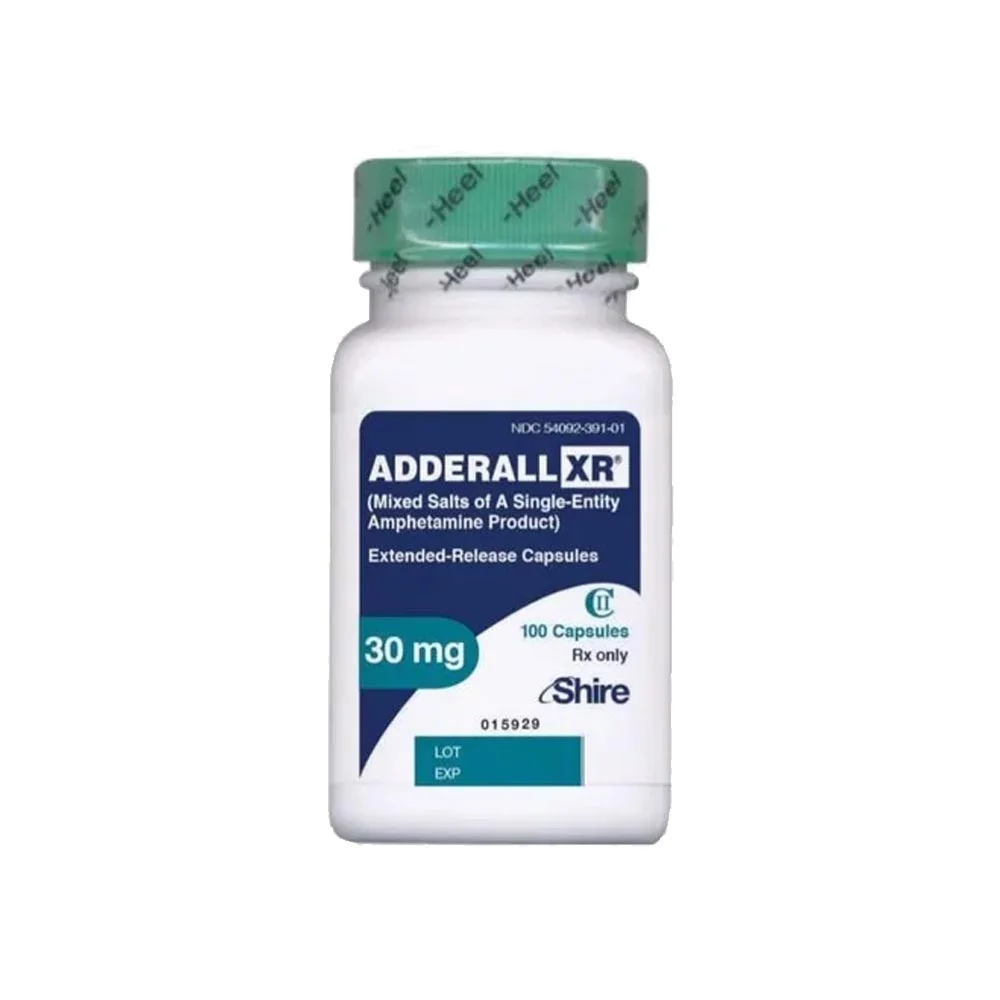
⚠️ Prescription required. Available only through licensed healthcare providers.
Note: Vyvanse is not currently available on our platform. This comparison is provided for educational purposes only.
8. Frequently Asked Questions
References & Authoritative Sources
This guide is based on evidence from the following authoritative sources. All information is reviewed and updated regularly to reflect the latest clinical guidelines and FDA recommendations.
[1] Centers for Disease Control and Prevention. ADHD Data & Statistics — CDC. Updated 2026.
[2] National Institutes of Health — MedlinePlus. Adderall: MedlinePlus Drug Information. NIH. Updated 2026.
[3] National Institutes of Health — MedlinePlus. Vyvanse: MedlinePlus Drug Information. NIH. Updated 2026.
[4] U.S. Drug Enforcement Administration. Controlled Substance Schedules — Schedule II. DEA.
[5] Mayo Clinic. ADHD — Symptoms and Causes. Mayo Clinic. Updated 2026.
[6] National Institute of Mental Health. ADHD — NIMH. NIH. Updated 2026.
Last reviewed and updated: July 14, 2026. This page is intended for educational purposes and should not replace professional medical advice.
📚 Need More Information?
Explore our comprehensive guides on ADHD and mental health.
Browse All Guides →