Soma vs Flexeril: Which Muscle Relaxer is Better for Back Pain?
A comprehensive, evidence-based comparison of Soma (Carisoprodol) and Flexeril (Cyclobenzaprine) for U.S. patients suffering from muscle spasms, back pain, and acute musculoskeletal injuries.
Table of Contents
1. Introduction
Musculoskeletal pain is one of the most common reasons Americans visit their doctors. According to the CDC, approximately 25% of U.S. adults experience low back pain at some point in their lives.[3] For acute muscle spasms, strains, and injuries, muscle relaxants like Soma (Carisoprodol) and Flexeril (Cyclobenzaprine) are frequently prescribed. But when it comes to Soma vs Flexeril for back pain, which one is actually better and safer?
The short answer: both are effective, but they work differently. Soma acts primarily on the central nervous system to produce rapid, powerful muscle relaxation with a sedative effect.[1] Flexeril acts more on the brainstem and has a slower onset but offers effective relief with a lower risk of dependence.[2] Both are FDA-approved for short-term use, but they have distinct safety profiles.
If you are exploring other pain management options, you may also find our comparison of Tramadol vs Oxycodone helpful for understanding opioid painkillers, or Valium vs Ativan for muscle tension related to anxiety.
🔗 External Authority Reference: According to the Mayo Clinic, acute back pain often improves with rest and physical therapy.[3] The NIH classifies Carisoprodol as a Schedule IV controlled substance due to its potential for dependence and abuse, while Cyclobenzaprine is not scheduled.[4]
2. What is Soma (Carisoprodol)?
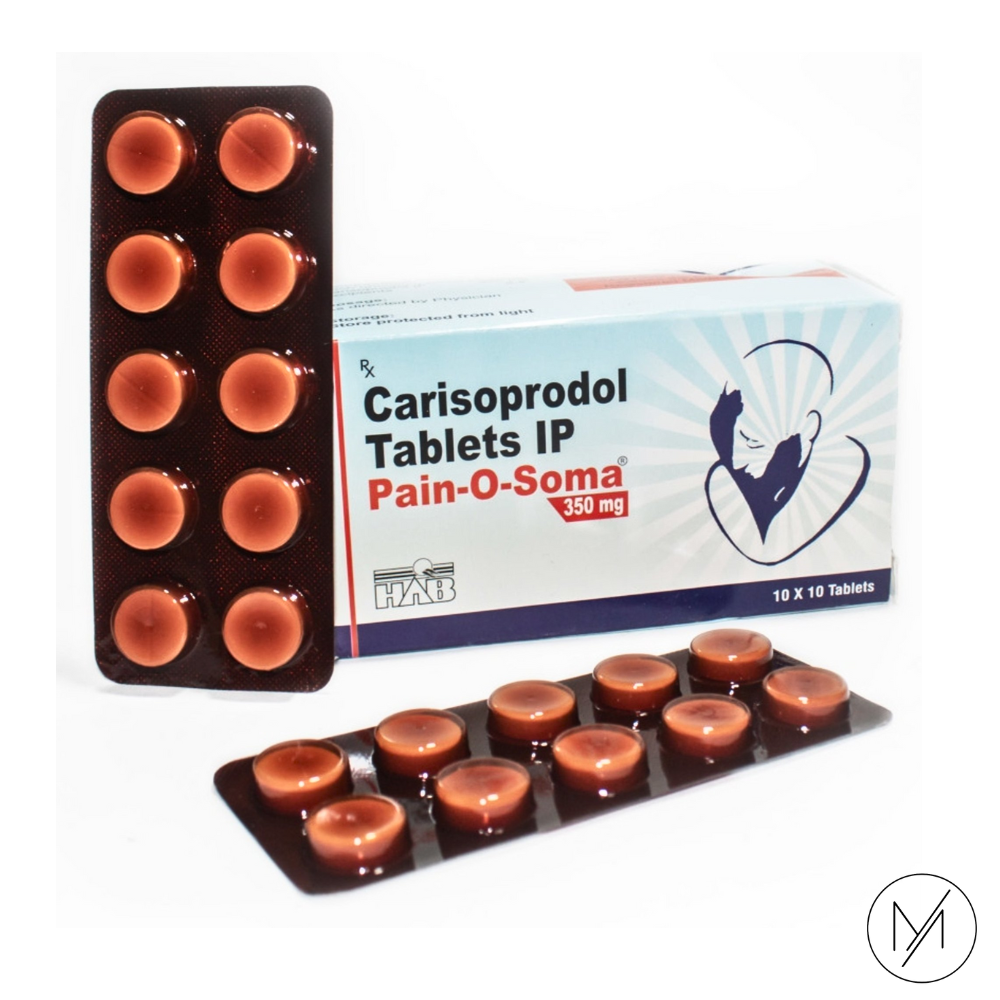
Soma is the brand name for Carisoprodol, a centrally acting muscle relaxant that is FDA-approved for the relief of acute, painful musculoskeletal conditions in adults.[1] It is typically used in combination with rest, physical therapy, and analgesics.
Soma has a relatively short half-life of about 2 to 4 hours and is metabolized in the liver to an active metabolite (meprobamate), which has sedative properties. It is classified as a Schedule IV controlled substance because of its potential for dependence and abuse, similar to benzodiazepines.[4]
How Soma Works
Soma works by blocking pain sensations between the nerves and the brain. It acts centrally on the spinal cord and brainstem, depressing the transmission of pain signals and producing a sedative effect that helps relax tense muscles.[1] Unlike Flexeril, Soma is not significantly anticholinergic, which means it is less likely to cause dry mouth or constipation.
Common Dosage
Soma is available in strengths of 250mg and 350mg tablets. The typical starting dose for adults is 250mg to 350mg taken three to four times daily. It is recommended for short-term use (up to 2-3 weeks) because long-term use can lead to dependence.[1]
👉 Learn More: For detailed information on dosage, side effects, and safety, read our comprehensive Soma 350mg Informative Guide.
3. What is Flexeril (Cyclobenzaprine)?
Flexeril is the brand name for Cyclobenzaprine, a skeletal muscle relaxant that is FDA-approved for the treatment of acute muscle spasms and associated pain.[2] It is structurally related to tricyclic antidepressants (TCAs) and shares some of their side effects.
Flexeril has a longer half-life of about 18 hours (with active metabolites extending up to 3 days). It is not classified as a controlled substance, making it a safer option for patients with a history of substance use disorder.[4]
How Flexeril Works
Flexeril primarily acts on the brainstem, reducing tonic somatic motor activity and producing a sedative effect. It does not directly affect skeletal muscle fibers or the neuromuscular junction, which means it does not block muscle contraction directly but rather reduces the nerve signals that cause spasms.[2] Its anticholinergic properties contribute to its sedative effect but also cause side effects like dry mouth.
Common Dosage
Flexeril is available in strengths of 5mg, 7.5mg, and 10mg tablets. The typical starting dose for adults is 5mg to 10mg taken three times daily. It is also recommended for short-term use (up to 2-3 weeks) due to the risk of tolerance and limited evidence for long-term efficacy.[2]
4. Soma vs Flexeril – Comparison Table
Here is a side-by-side comparison of the key differences between Soma (Carisoprodol) and Flexeril (Cyclobenzaprine):[1][2]
| Feature | Soma (Carisoprodol) | Flexeril (Cyclobenzaprine) |
|---|---|---|
| Drug Class | Centrally Acting Muscle Relaxant | Centrally Acting Muscle Relaxant |
| DEA Schedule | Schedule IV (Controlled) | Not Scheduled (Non-controlled) |
| Half‑Life | 2 – 4 hours | ~18 hours (longer) |
| Onset of Action | 30 minutes (rapid) | 1 – 2 hours (slower) |
| Duration of Effect | 4 – 6 hours | 6 – 8 hours (with residual effects) |
| Primary Indications | Acute muscle spasms, musculoskeletal pain | Acute muscle spasms, fibromyalgia (off-label) |
| Common Strengths | 250mg, 350mg | 5mg, 7.5mg, 10mg |
| Key Side Effects | Drowsiness, dizziness, dependence risk | Dry mouth, constipation, drowsiness |
| Best For | Rapid relief, acute spasms, patients without substance abuse history | Sustained relief, patients with sensitivity to controlled substances |
5. Onset & Duration of Action
Understanding the timing of these medications is crucial for managing acute muscle spasms and planning your daily activities, especially if you need to drive or operate machinery.[1][2]
Soma – Fast and Strong
Soma is well-known for its rapid onset. It typically begins working within 30 minutes of oral administration, with peak effects in 1-2 hours.[1] This makes it the preferred choice for patients who need immediate relief from intense, acute muscle spasms. However, its short half-life (2-4 hours) means it needs to be taken 3-4 times daily to maintain coverage.
The active metabolite of Soma, meprobamate, has a longer half-life and contributes to its sedative and dependence profile.
Flexeril – Slower, Smoother, Longer
Flexeril has a slower onset of 1-2 hours and takes 3-4 days to reach full therapeutic effect.[2] Its long half-life (~18 hours) means it provides longer-lasting relief with once or twice daily dosing in some patients. However, this long half-life also means that residual sedation can extend into the next day, which may affect daytime functioning.
Flexeril's slower onset makes it less suitable for "breakthrough" spasms but better for maintaining continuous relief throughout the day.
6. Side Effects Comparison
Both medications share similar side effect profiles, but some are more pronounced with one than the other. Understanding these differences can help you and your doctor make the right choice.[1][2]
Common Side Effects of Soma
- Drowsiness and sedation (very common, often dose-dependent)
- Dizziness and headache
- Ataxia (lack of coordination)
- Nausea
- Dependence and withdrawal – especially with long-term use
Common Side Effects of Flexeril
- Dry mouth (very common, due to anticholinergic effects)
- Drowsiness and fatigue
- Constipation
- Blurred vision
- Urinary retention (less common but serious)
Serious Risks (Both)
- Dependence & Withdrawal (Soma only): Soma is a Schedule IV controlled substance. Withdrawal symptoms can include insomnia, abdominal cramps, and anxiety.[4] Flexeril does not typically cause physical dependence.
- Serotonin Syndrome: Both can interact with SSRIs and MAOIs, increasing the risk of serotonin syndrome.[5]
- Driving Impairment: Both cause significant sedation, making it dangerous to drive or operate machinery.
Always use these medications exactly as prescribed and never stop Soma abruptly without your doctor's guidance due to the risk of withdrawal.
7. Which One Should You Choose?
The choice between Soma and Flexeril is a clinical decision that depends on your specific pain severity, risk factors, and lifestyle.[3]
Consider Soma if you:
- Need fast, immediate relief for acute muscle spasms.
- Have no history of substance abuse (due to Schedule IV status).
- Can take medication 3-4 times daily.
- Prefer a medication with fewer anticholinergic side effects (like dry mouth).
- Need a short-term solution (2-3 weeks) for a specific injury.
Consider Flexeril if you:
- Have mild to moderate muscle spasms that don't require immediate onset.
- Prefer a non-controlled substance with lower dependence risk.
- Can tolerate anticholinergic side effects like dry mouth.
- Prefer once or twice daily dosing for convenience.
- Have a history of substance use disorder (safer option).
Important: According to the Mayo Clinic, the most effective treatment for chronic back pain is usually a combination of physical therapy, exercise, and non-opioid analgesics.[3] Muscle relaxants are best used as a short-term adjunct to these therapies, not as a standalone solution.
📚 Learn More About Muscle Relaxants
Explore our educational guides on muscle relaxants available in the U.S.
⚠️ Prescription required. Available only through licensed healthcare providers. Soma is a controlled substance.
8. Frequently Asked Questions
References & Authoritative Sources
This guide is based on evidence from the following authoritative sources. All information is reviewed and updated regularly to reflect the latest clinical guidelines and FDA recommendations.
[1] National Institutes of Health — MedlinePlus. Carisoprodol (Soma): MedlinePlus Drug Information. NIH. Updated 2026.
[2] National Institutes of Health — MedlinePlus. Cyclobenzaprine (Flexeril): MedlinePlus Drug Information. NIH. Updated 2026.
[3] Mayo Clinic. Back Pain — Symptoms and Causes. Mayo Clinic. Updated 2026.
[4] U.S. Drug Enforcement Administration. Controlled Substance Schedules — Schedule IV. DEA.
[5] American Academy of Orthopaedic Surgeons. Clinical Practice Guideline for the Management of Acute Musculoskeletal Pain. 2023.
[6] National Institute of Neurological Disorders and Stroke. Musculoskeletal Pain — NINDS. NIH. Updated 2026.
Last reviewed and updated: July 14, 2026. This page is intended for educational purposes and should not replace professional medical advice.
📚 Need More Information?
Explore our comprehensive guides on pain management and muscle health.
Browse All Guides →