Xanax vs Klonopin: Which is Better for Panic Disorder and Anxiety?
A detailed evidence-based comparison of Xanax (Alprazolam) and Klonopin (Clonazepam) for U.S. patients struggling with panic disorder, generalized anxiety, and acute anxiety attacks.
Table of Contents
1. Introduction
Panic disorder and generalized anxiety affect over 40 million adults in the United States each year, making them the most common mental health conditions in the country.[1] For many Americans, finding the right medication is a life-changing decision. Two of the most commonly prescribed benzodiazepines for these conditions are Xanax (Alprazolam) and Klonopin (Clonazepam). But when it comes to Xanax vs Klonopin for panic disorder, which one is actually better?
The short answer: it depends on your specific needs. Xanax is a short-acting medication designed for rapid relief during sudden panic attacks, while Klonopin is a long-acting benzodiazepine that provides sustained protection against anxiety throughout the day.[2][3] Both are FDA-approved and available by prescription only in the United States.
Before we dive into the details, if you're exploring other anxiety medications, you may also find our comparison of Valium vs Xanax and Klonopin vs Ativan helpful for a broader perspective.
This comprehensive guide will compare Xanax and Klonopin across multiple dimensions — mechanism of action, onset, duration, side effects, and ideal use cases — so you can have an informed discussion with your healthcare provider.
🔗 External Authority Reference: According to the Mayo Clinic, panic attacks can be effectively managed with a combination of medication and therapy.[4] The FDA classifies both Alprazolam and Clonazepam as Schedule IV controlled substances due to their potential for dependence.[5]
2. What is Xanax (Alprazolam)?
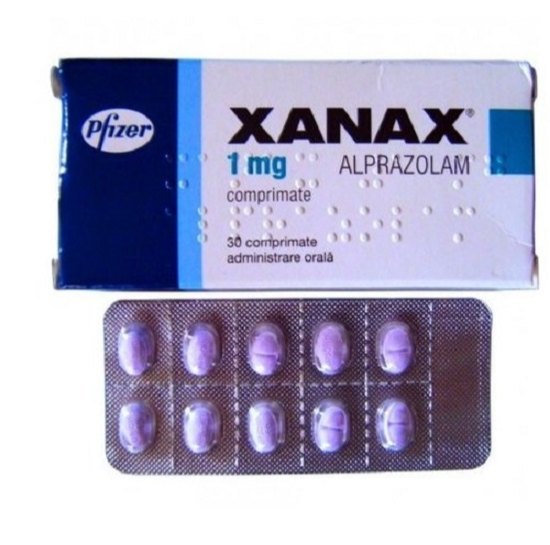
Xanax is the brand name for Alprazolam, a short-acting benzodiazepine that is FDA-approved for the treatment of Generalized Anxiety Disorder (GAD) and Panic Disorder (with or without agoraphobia).[2] It is one of the most prescribed psychiatric medications in the United States, with over 15 million prescriptions written annually.
Xanax has a relatively short half-life of about 11 to 20 hours.[2] This means it works very quickly but also leaves the body faster than many other benzodiazepines. This makes it highly effective for acute anxiety episodes or panic attacks, where rapid relief is crucial. For U.S. patients who experience unpredictable panic attacks, Xanax is often the first-line choice.
How Xanax Works
Xanax binds to the GABA-A receptor complex in the brain, specifically targeting the alpha-1 subunits. By enhancing the inhibitory effects of GABA (gamma-aminobutyric acid), it reduces the overactivity of neurons that cause anxiety and panic.[2] Its rapid absorption gives it a fast onset of action, making it one of the fastest-acting benzodiazepines available.
Common Dosage
Xanax is available in strengths of 0.25mg, 0.5mg, 1mg, and 2mg tablets. For panic disorder, the typical starting dose for adults is 0.5mg taken three times daily. The dose may be gradually increased based on response, up to a maximum of 4mg per day in divided doses. For elderly patients or those with liver impairment, lower doses are recommended.[2]
👉 Learn More: For detailed information on dosage, side effects, and safety, read our comprehensive Xanax 1mg Informative Guide.
3. What is Klonopin (Clonazepam)?
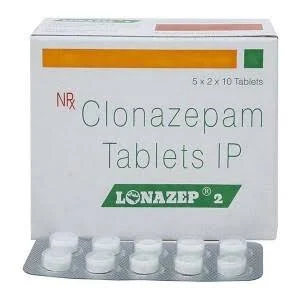
Klonopin is the brand name for Clonazepam, a long-acting benzodiazepine that is FDA-approved for the treatment of Panic Disorder and certain types of Seizure Disorders.[3] It is also commonly prescribed off-label for generalized anxiety and social anxiety disorder.
Klonopin has a significantly longer half-life of about 30 to 40 hours.[3] This extended duration means it stays in the body for a long time, providing consistent symptom control throughout the day. This makes it ideal for patients who experience frequent panic attacks or have generalized anxiety that persists all day. Many U.S. psychiatrists prefer Klonopin for patients who need all-day coverage without the "peak and valley" effect of shorter-acting medications.
How Klonopin Works
Like Xanax, Klonopin enhances GABA activity. However, its molecular structure allows it to bind more strongly to certain receptor subtypes, resulting in a longer duration of action.[3] It also has muscle-relaxant properties, which can be beneficial for patients whose anxiety manifests as muscle tension, headaches, or jaw clenching.
Common Dosage
Klonopin is available in strengths of 0.5mg, 1mg, and 2mg tablets. For panic disorder, the typical starting dose is 0.25mg to 0.5mg taken twice daily. The dose may be increased up to a maximum of 4mg per day, divided into two doses. As with all benzodiazepines, the lowest effective dose should be used.[3]
👉 Learn More: For detailed information on dosage, side effects, and safety, read our comprehensive Klonopin 2mg Informative Guide.
4. Xanax vs Klonopin – Comparison Table
Here is a side-by-side comparison of the key differences between Xanax (Alprazolam) and Klonopin (Clonazepam):[2][3]
| Feature | Xanax (Alprazolam) | Klonopin (Clonazepam) |
|---|---|---|
| Drug Class | Benzodiazepine (Short-acting) | Benzodiazepine (Long-acting) |
| Half‑Life | 11 – 20 hours | 30 – 40 hours |
| Onset of Action | 15 – 30 minutes | 30 – 60 minutes |
| Duration of Effect | 4 – 6 hours | 8 – 12 hours (sustained) |
| Primary Indications | Panic Disorder, GAD, Acute Anxiety | Panic Disorder, Seizure Disorders, GAD (off-label) |
| Common Strengths | 0.25mg, 0.5mg, 1mg, 2mg | 0.5mg, 1mg, 2mg |
| Best For | Sudden panic attacks, situational anxiety | Frequent panic attacks, all-day anxiety control |
| Common Side Effects | Memory issues, rebound anxiety | Sedation, fatigue, muscle weakness |
5. Onset & Duration of Action
Understanding the timing of these medications is critical for choosing the right one for your lifestyle and symptom pattern.[2][3]
Xanax – Fast and Short
Xanax is designed for rapid relief. Its onset is within 15 to 30 minutes, making it one of the fastest-acting benzodiazepines available.[2] This makes it the gold standard for aborting a panic attack as it happens. For U.S. patients who have unpredictable panic attacks, the ability to take a medication and feel relief within minutes is invaluable.
However, its short half-life means the effects wear off after 4 to 6 hours. This can lead to "rebound anxiety" between doses — a sudden return of anxiety symptoms when the medication wears off. Patients taking Xanax may need to take it 2-3 times daily to maintain consistent coverage.
Klonopin – Slow and Steady
Klonopin takes slightly longer to work (30 to 60 minutes) but provides a much longer duration of action (8 to 12 hours).[3] Its long half-life means that patients often need only two doses per day to maintain consistent symptom control.
This steady state is particularly beneficial for patients who wake up with anxiety or experience panic attacks unpredictably throughout the day. It also reduces the risk of rebound anxiety between doses, providing a more stable therapeutic effect. Many U.S. psychiatrists prefer Klonopin for patients who have generalized anxiety that lasts all day.
6. Side Effects Comparison
Both medications share similar side effects, but some are more pronounced with one than the other. Understanding these differences can help you and your doctor make the right choice.[2][3]
Common Side Effects of Xanax
- Drowsiness and sedation – especially when starting treatment
- Memory impairment (short-term amnesia) – more common with Xanax due to its rapid onset
- Dizziness and lightheadedness
- Rebound anxiety – when the dose wears off between intervals
- Dry mouth
- Changes in appetite
Common Side Effects of Klonopin
- Sedation and fatigue – more pronounced due to longer duration
- Muscle weakness
- Ataxia (lack of coordination)
- Dizziness
- Depression or mood changes
- Constipation
Serious Risks (Both)
- Dependence & Withdrawal: Both are Schedule IV controlled substances. Withdrawal can cause rebound anxiety, insomnia, tremors, and in severe cases, seizures. According to the FDA, benzodiazepines should not be stopped abruptly.[5]
- Respiratory Depression: Especially when combined with alcohol or opioids.
- Paradoxical Reactions: Rarely, these medications can cause increased anxiety or aggression.
Important: These medications must be used exactly as prescribed and never stopped abruptly without a doctor's supervision.
7. Which One Should You Choose?
The choice between Xanax and Klonopin is a clinical decision that should be made with your healthcare provider. Here are general guidelines to help you prepare for that conversation:[4]
Consider Xanax if you:
- Experience sudden, intense panic attacks that are unpredictable.
- Need fast-acting relief (within 15-30 minutes).
- Prefer a flexible, as-needed dosing schedule.
- Have situational anxiety (e.g., flying, public speaking, medical procedures).
Consider Klonopin if you:
- Experience frequent panic attacks or generalized anxiety throughout the day.
- Prefer once- or twice-daily dosing for convenience.
- Need sustained, all-day protection against anxiety.
- Also suffer from muscle tension or seizures.
Important: Your doctor will evaluate your medical history, the frequency of your panic attacks, and your lifestyle to determine the best fit. Some doctors even prescribe Xanax for "breakthrough" panic attacks and Klonopin as a daily maintenance medication.
If you're still exploring options, you may also want to read our comparisons of Valium vs Xanax and Klonopin vs Ativan for a more complete picture of benzodiazepine options.
📚 Learn More About Anxiety Medications
Explore our educational guides on anxiety medications available in the U.S.
⚠️ Prescription required. Available only through licensed healthcare providers.
8. Frequently Asked Questions
References & Authoritative Sources
This guide is based on evidence from the following authoritative sources. All information is reviewed and updated regularly to reflect the latest clinical guidelines and FDA recommendations.
[1] National Institute of Mental Health. Any Anxiety Disorder — NIMH. NIH. Updated 2026.
[2] National Institutes of Health — MedlinePlus. Alprazolam (Xanax): MedlinePlus Drug Information. NIH. Updated 2026.
[3] National Institutes of Health — MedlinePlus. Clonazepam (Klonopin): MedlinePlus Drug Information. NIH. Updated 2026.
[4] Mayo Clinic. Panic Attacks — Symptoms and Causes. Mayo Clinic. Updated 2026.
[5] U.S. Drug Enforcement Administration. Controlled Substance Schedules — Schedule IV. DEA.
[6] American Psychiatric Association. Diagnostic and Statistical Manual of Mental Disorders, Fifth Edition, Text Revision (DSM-5-TR). 2022.
[7] U.S. Food and Drug Administration. Benzodiazepine Drug Information — FDA. FDA. Updated 2026.
Last reviewed and updated: July 14, 2026. This page is intended for educational purposes and should not replace professional medical advice.
📚 Need More Information?
Explore our comprehensive guides on anxiety and mental health.
Browse All Guides →